12.05.2026
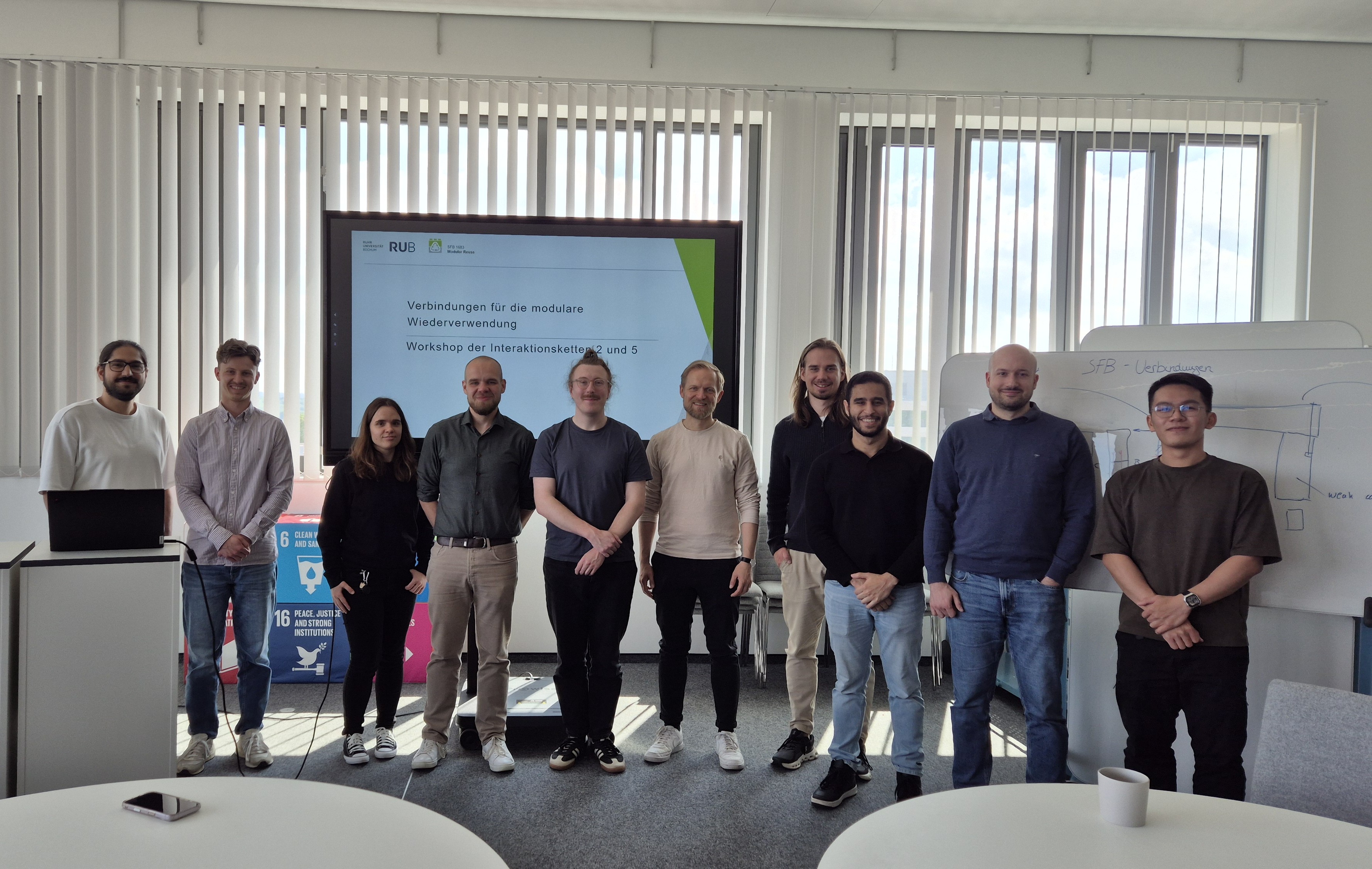
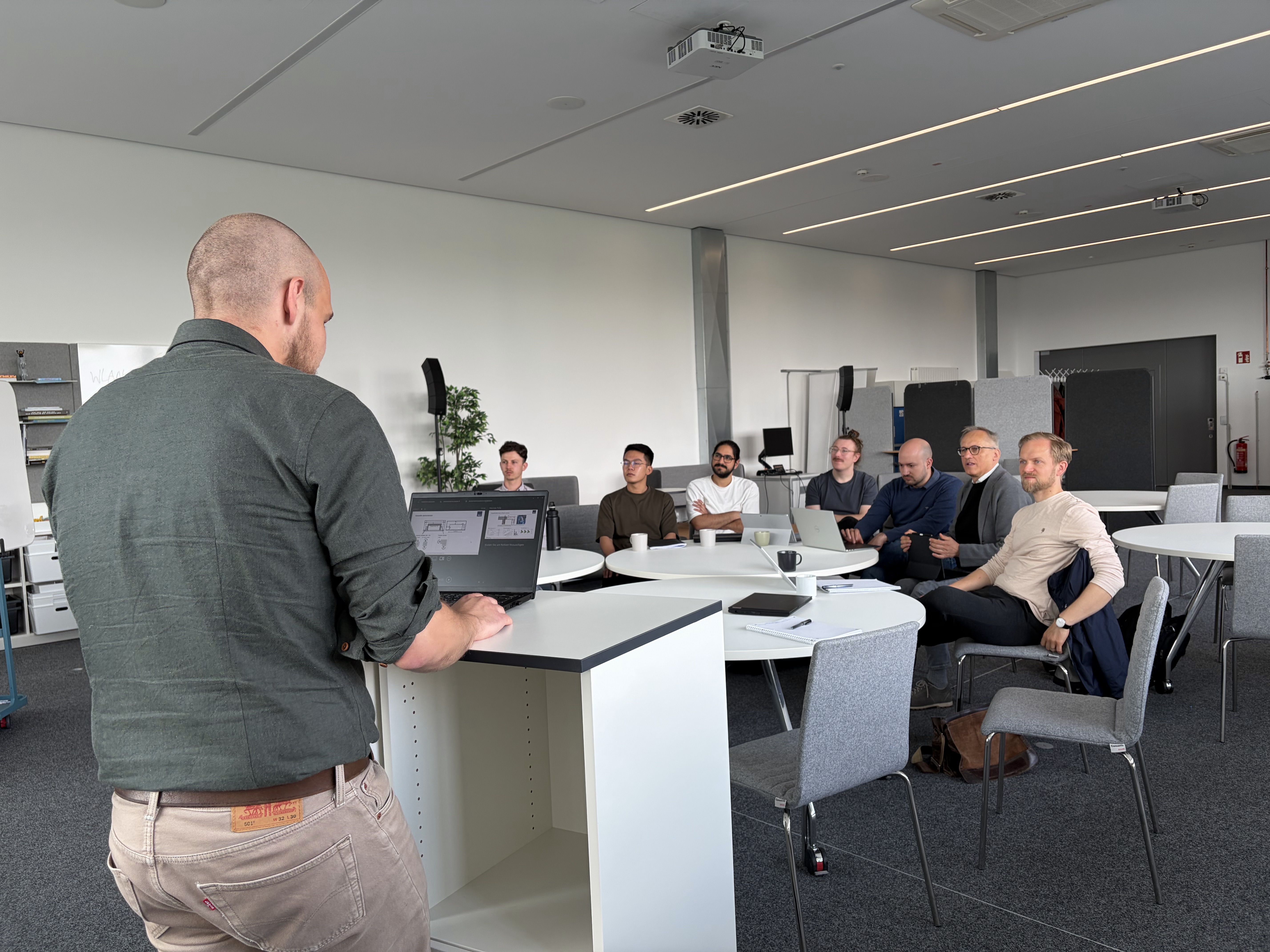
On 7 May 2026, a workshop on the topic of connections for modular reuse took place as a collaboration of Interaction Chains 2 ‘Strategy of Automation and Standardisation’ and 5 ‘Demonstrators’.
Initially, the sub-projects presented their respective perspectives on the topic, shared their existing findings, and outlined their planned investigations. This led to technical discussions, particularly regarding potential new interactions and synergies between the sub-projects.
Following an intensive joint exchange, three connection designs for dry concrete joints were identified for implementation on the scientific demonstrator during the first funding period. During this process, technical details were examined from various perspectives, and the different technical requirements and boundary conditions of the sub-projects were brought together and coordinated. Two variants were developed for the realisation of a pressure contact connection (hinged and semi rigid) and one variant for rigid frame corner were developed. The choice of connection design depending on the internal forces to be transmitted forms an essential basis for further research within the sub-projects. At the same time, implementing the joints on the scientific demonstrator creates a direct link between the theoretical and experimental sub-projects.
The workshop marked the beginning of an iterative development process, with subsequent meetings to further adapt the joint designs to meet requirements for manufacturability, load-bearing capacity, automation, and standardisation for modular reuse.
On 7 May 2026, a workshop on the topic of connections for modular reuse took place as a collaboration of Interaction Chains 2 ‘Strategy of Automation and Standardisation’ and 5 ‘Demonstrators’.
Initially, the sub-projects presented their respective perspectives on the topic, shared their existing findings, and outlined their planned investigations. This led to technical discussions, particularly regarding potential new interactions and synergies between the sub-projects.
Following an intensive joint exchange, three connection designs for dry concrete joints were identified for implementation on the scientific demonstrator during the first funding period. During this process, technical details were examined from various perspectives, and the different technical requirements and boundary conditions of the sub-projects were brought together and coordinated. Two variants were developed for the realisation of a pressure contact connection (hinged and semi rigid) and one variant for rigid frame corner were developed. The choice of connection design depending on the internal forces to be transmitted forms an essential basis for further research within the sub-projects. At the same time, implementing the joints on the scientific demonstrator creates a direct link between the theoretical and experimental sub-projects.
The workshop marked the beginning of an iterative development process, with subsequent meetings to further adapt the joint designs to meet requirements for manufacturability, load-bearing capacity, automation, and standardisation for modular reuse.
Copyright © SFB1683 2026
Last update: May 12, 2026