29.11.2025
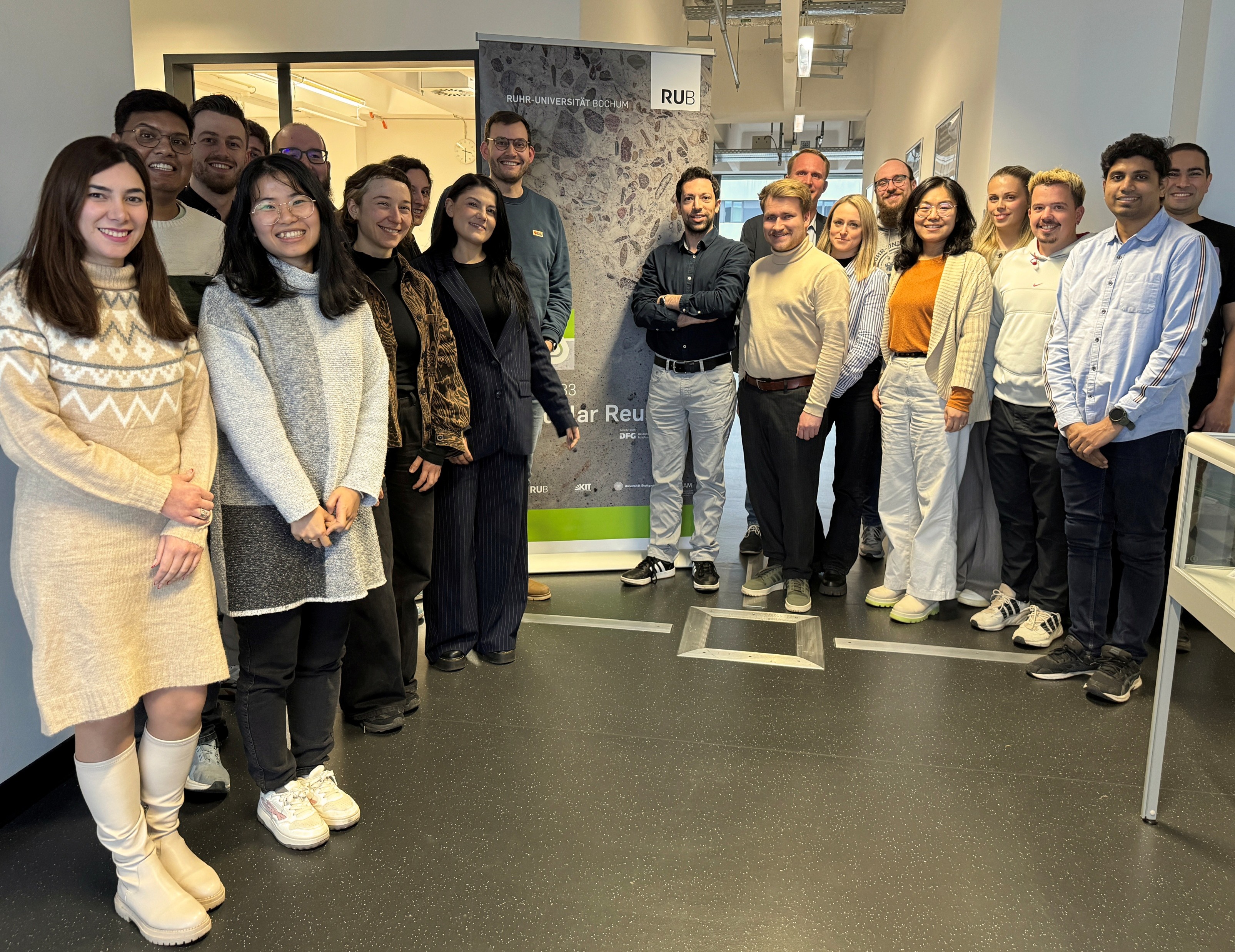
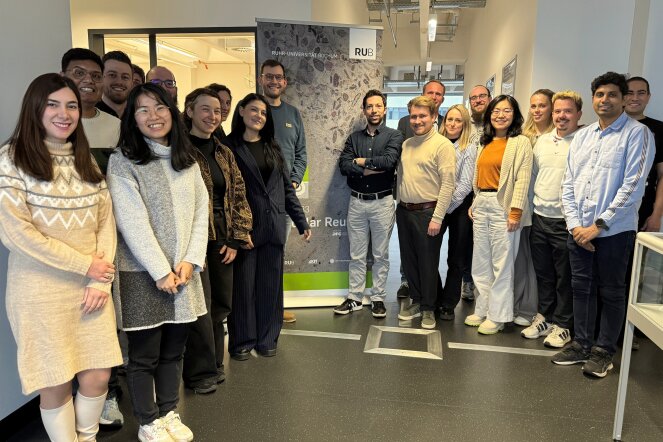
On November 26, 2025, the Chair of Computing in Engineering at Ruhr University Bochum hosted a mini-symposium and workshop on _Circularity and Data Spaces_.
The event, organized by the research team of Project C01 within CRC 1683, brought together researchers from TU Eindhoven and RUB to discuss current developments in digital ecosystems, material passports, ontologies, and data-driven methods for circular construction.
The event began with contributions from TU Eindhoven. Prof. Ekaterina Petrova (on behalf of her PhD student Krista van Zanderwijk) introduced the UPSCALE project, highlighting challenges in fragmented and non-standardized material supply chains. She presented TU/e’s work on decentralized and dynamic digital passports, including emerging standards such as Decentralized Identifiers (DID) and Verifiable Credentials. Julia Kaltenegger followed with insights into multimodal data prediction for existing buildings. Her presentation focused on semantic graph enrichment, probabilistic reasoning, and integrating machine-learning models with domain-specific expert knowledge to support material characterization within digital ontologies. In the third TU/e talk, Avinash Ramachandruni presented “Project Wilson,” outlining information flows in a minimal viable dataspace. He discussed identity and trust mechanisms, data contracts, and interoperability models, showing how connectors and identity hubs enable secure exchange of building information.
Philipp Hagedorn (RUB, CRC 1683) provided an overview of Project C01 and the digital ecosystem being developed within the CRC. He highlighted the need for an integrated system that maps all processes involved in the circular reuse of concrete elements. The proposed architecture relies on interoperable semantic standards to ensure coherent data representation and to enable Digital Twins at both building and element levels. Nina Krautgartner (RUB, CRC 1683) concluded the presentation session with a talk on GIS-integrated simulation of logistics processes for the reuse of structural concrete elements. Her presentation emphasized logistical workflows, process requirements, and the need for appropriately structured and linked data to support planning, matching, and efficient transport of reused components across a distributed network.
In the afternoon, thematic group sessions brought participants together to discuss ontologies for material properties, digital ecosystems and data spaces, and data requirements for circular construction. The workshop concluded with a shared understanding of the importance of interoperable data structures, semantic standards, and trustworthy information flows for sustainable modular reuse in the built environment. During the final discussion, participants addressed key questions regarding future data infrastructures for circularity:
On November 26, 2025, the Chair of Computing in Engineering at Ruhr University Bochum hosted a mini-symposium and workshop on _Circularity and Data Spaces_.
The event, organized by the research team of Project C01 within CRC 1683, brought together researchers from TU Eindhoven and RUB to discuss current developments in digital ecosystems, material passports, ontologies, and data-driven methods for circular construction.
The event began with contributions from TU Eindhoven. Prof. Ekaterina Petrova (on behalf of her PhD student Krista van Zanderwijk) introduced the UPSCALE project, highlighting challenges in fragmented and non-standardized material supply chains. She presented TU/e’s work on decentralized and dynamic digital passports, including emerging standards such as Decentralized Identifiers (DID) and Verifiable Credentials. Julia Kaltenegger followed with insights into multimodal data prediction for existing buildings. Her presentation focused on semantic graph enrichment, probabilistic reasoning, and integrating machine-learning models with domain-specific expert knowledge to support material characterization within digital ontologies. In the third TU/e talk, Avinash Ramachandruni presented “Project Wilson,” outlining information flows in a minimal viable dataspace. He discussed identity and trust mechanisms, data contracts, and interoperability models, showing how connectors and identity hubs enable secure exchange of building information.
Philipp Hagedorn (RUB, CRC 1683) provided an overview of Project C01 and the digital ecosystem being developed within the CRC. He highlighted the need for an integrated system that maps all processes involved in the circular reuse of concrete elements. The proposed architecture relies on interoperable semantic standards to ensure coherent data representation and to enable Digital Twins at both building and element levels. Nina Krautgartner (RUB, CRC 1683) concluded the presentation session with a talk on GIS-integrated simulation of logistics processes for the reuse of structural concrete elements. Her presentation emphasized logistical workflows, process requirements, and the need for appropriately structured and linked data to support planning, matching, and efficient transport of reused components across a distributed network.
In the afternoon, thematic group sessions brought participants together to discuss ontologies for material properties, digital ecosystems and data spaces, and data requirements for circular construction. The workshop concluded with a shared understanding of the importance of interoperable data structures, semantic standards, and trustworthy information flows for sustainable modular reuse in the built environment. During the final discussion, participants addressed key questions regarding future data infrastructures for circularity:
Copyright © SFB1683 2025
Last update: Nov 30, 2025